

In today's API-driven applications, security, scalability, and stability are key. One way Laravel helps developers achieve this is through API rate limiting. Whether you're building an internal API or a public-facing one, rate limiting protects your backend from abuse and overload.
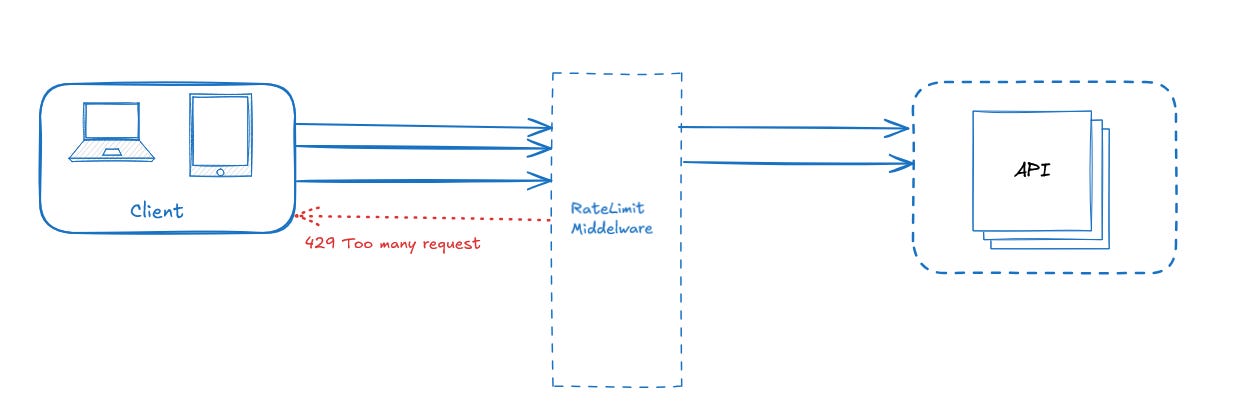
🔍 What is API Rate Limiting?
Rate limiting is a technique used to control how many requests a user (or client) can make to your API in a given period.
For example:
"You can only send 60 requests per minute."
Laravel uses a powerful middleware system to enforce these limits.
🛡️ Why Should You Use Rate Limiting?
Rate limiting is crucial for:
🔐 Preventing brute force login attacks
🛑 Stopping spamming bots or scrapers
⚖️ Ensuring fair use among all users
🔄 Avoiding server overload or denial-of-service (DoS)
💰 Tiered API limits for free vs premium users
🛠️ How Laravel Handles Rate Limiting
Laravel includes ThrottleRequests middleware out of the box.
🧩 1. Route::middleware('throttle:60,1')->group(...)
✅ Best For:
Simple, quick rate limiting
When all routes in a group share the same limit
Great for small to medium-sized APIs with no user-based customization.
Route::middleware('throttle:60,1')->group(function () {
    Route::get('/posts', [PostController::class, 'index']);
    Route::post('/comments', [CommentController::class, 'store']);
});
💡 Use case:
You want to limit all visitors to 60 requests per minute to avoid abuse.
🧩 2. Route::middleware('throttle:10,1') on single routes
✅ Best For:
Sensitive endpoints (login, registration)
Limiting abuse only on specific actions
Route::post('/login', [AuthController::class, 'login'])
    ->middleware('throttle:5,1');
💡 Use case:
Allow only 5 login attempts per minute per user/IP. (Limit login attempts to prevent brute-force).
🧩 3. Custom RateLimiter::for() in RouteServiceProvider
✅ Best For:
Dynamic logic based on user role, API key, IP, or even route
Centralized, scalable configuration
Required if you want different limits for different users or plans.
📘 Example 1: Role-based limits (premium vs free users)
// RouteServiceProvider.php
RateLimiter::for('user-api', function (Request $request) {
    return $request->user()?->is_premium
        ? Limit::perMinute(100)->by($request->user()->id)
        : Limit::perMinute(20)->by($request->user()->id);
});
Then in api.php:
Route::middleware('throttle:user-api')->get('/dashboard', [DashboardController::class, 'index']);💡 Use case:
Premium users get higher rate limits than free users.
📘 Example 2: API key-based throttling
RateLimiter::for('api-key', function (Request $request) {
    $apiKey = $request->header('X-API-KEY');
    return Limit::perHour(1000)->by($apiKey);
});
In routes:
Route::middleware('throttle:api-key')->get('/v1/public-data', [ApiController::class, 'index']);💡 Use case:
Public API where users authenticate using API keys — enforce hourly limits per API key.
🧠 Best Practices for Rate Limiting
⚠️ Return proper
429 Too Many Requestsresponses.🔁 Use
Retry-Afterheader to tell clients when they can retry.🔐 Apply stricter limits to login, registration, and sensitive endpoints.
📊 Use monitoring tools like Telescope or Laravel Debugbar for insight.
✨ Conclusion
Rate limiting is a simple yet powerful way to secure your Laravel APIs and maintain server performance. With Laravel's built-in support, implementing smart limits is just a few lines of code away.